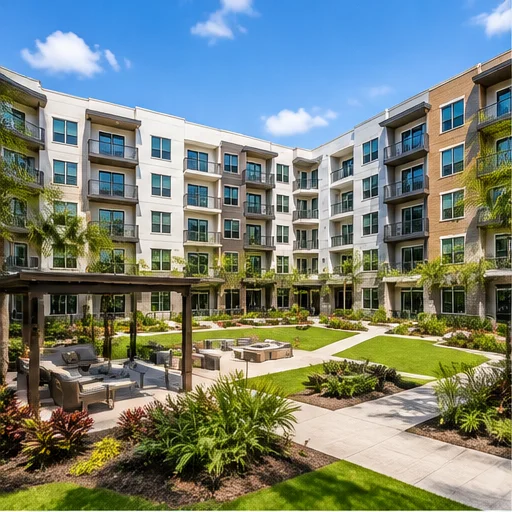
Multifamily Loans (5+ Units)
Multifamily Loans (5+ Units) in Tampa, Florida
Apartments are operated unit by unit, but financed as an integrated commercial property. Start with collections, expenses and the capital needed to maintain the community.
Financing review for apartment community
An apartment community with five or more units requires a commercial lending review that goes beyond a residential mortgage application. Lenders examine the property’s operating history, physical condition, tenant collections and the sponsor’s ability to manage ongoing obligations. Commercial Real Estate Loans Florida helps owners in Tampa identify the records that support that review, whether the objective is an acquisition or a refinance.
A headline occupancy figure can conceal significant differences between leased units and paying residents. A current unit-level rent roll should identify scheduled rent, concessions, deposits, balances owed and lease dates. Reconcile those figures with the operating statements so the lender can distinguish recurring collections from advertised rental potential. If units were recently renovated, explain which rents are established and which depend on future turnover.
Tampa apartment properties serve different household needs depending on location, unit mix and access to employment. A community near a workplace district does not automatically command a particular rent or occupancy level. Review current competing properties, the condition of your units and realistic resident turnover costs. An acquisition plan should remain workable when ordinary vacancy and maintenance occur, not only when every projected increase is achieved.
Apartment records that explain the operating story
Commercial multifamily underwriting considers income and value alongside the expenses required to sustain occupancy. Insurance, taxes, utilities, management and maintenance should be supported by current evidence. If the seller self-manages or has deferred work, the lender may normalize expenses rather than accept unusually low historical costs. Capital projects belong in a separate plan with credible funding. The financing structure should also match your management capabilities and intended hold period. An extended repayment schedule may still carry an earlier maturity date. Reserve requirements and any restrictions on distributions affect available cash. Discuss these obligations before comparing a proposal only by initial payment.
Unit mix and tenant collections
Provide the number and type of units, current rent roll, collection history and lease expirations. Explain nonrevenue units, employee apartments and concessions. A lender needs to understand whether the income reflects normal operations or a temporary condition. New leases should be separated from unsigned leasing expectations, and material delinquencies should be visible rather than offset by unrelated income.
Property systems and deferred work
Roofs, plumbing, electrical systems, pavement and amenities can create capital needs across an entire community. Review inspections and maintenance records, then identify immediate repairs and longer-term replacements. Funding for that work must be considered alongside equity at closing. A clean exterior does not remove the need to inspect building systems or evaluate the impact of any unresolved safety issue.
Management and sponsor readiness
Show who will handle leasing, collections, resident requests and financial reporting after closing. Prior property experience can help explain the operating plan, but the lender may still request financial statements and liquidity evidence. A new ownership entity should have clear authority to borrow. Avoid assuming that forming an entity eliminates guarantor obligations or other requirements in the proposed loan documents.
Insurance and expense normalization
Obtain an insurance indication suited to the actual building, occupancy and location. Separate owner expectations from binding coverage and deductibles. Taxes may change following a sale, and utility responsibilities may differ by lease. A realistic budget should explain these items and leave room for ordinary turnover. Small changes in recurring expenses can materially affect the income available for debt service.
From property summary to a documented decision
- 1
Define the objective and timing
Describe the apartment community, its address and current ownership. State whether the request concerns an acquisition, a refinance or business occupancy. Include the expected closing date or existing maturity and disclose known material issues. An accurate initial summary helps identify the next appropriate questions without presenting a brief inquiry as a final underwriting package.
- 2
Reconcile the operating evidence
Assemble unit-level rent roll and apartment operating statements. Explain discrepancies, one-time items and projected changes. Provide sponsor information when requested through an agreed secure delivery method. The goal is to support the financing assumptions with records that can be reviewed, rather than leave critical facts dependent on verbal assurances or a seller’s optimistic presentation.
- 3
Compare conditions and complete diligence
Review available proposals for the apartment community against the requested proceeds, required cash, maturity, recourse and exit provisions. Coordinate lender-required reports and independent professional review. New findings may change the original request, so keep the operating plan and transaction timeline current as outstanding conditions are resolved.
- 4
Confirm the closing obligations
Distinguish an initial indication from final written approval. Review the closing statement, reserve requirements and ongoing reporting responsibilities with the appropriate professionals. Confirm how any existing debt is repaid and which conditions remain before funding. After closing, maintain the records and monitoring needed to satisfy the actual loan agreement.
Support for your commercial financing review
A focused property discussion
We frame the initial conversation around the apartment community and the evidence needed to understand its operations. That keeps asset-specific issues visible instead of forcing the request into a generic financing summary.
A broader term comparison
Proceeds matter, but so do guarantees, restricted reserves and the ability to exit the loan. We encourage a comparison that reflects the owner’s objectives and the property’s upcoming obligations.
Clear next requests
A lender can need more information as review progresses. Identifying the purpose of each request helps owners prepare accurate records while keeping confidential material out of the initial public inquiry.
Frequently Asked Questions
Can projected renovation rents support the full loan request?
A lender may distinguish established collections from renovation projections and may require additional evidence, reserves or a different structure. Provide the renovation scope, cost estimates, completed work and signed leases. Do not assume that a future rent target will be treated the same as recurring income already collected.
Are smaller residential rentals reviewed on this page?
This program discussion addresses properties with five or more residential units. Buildings below that threshold may fall under different loan categories and underwriting standards. Identify the legal unit count and property use before proceeding so the financing review starts with the appropriate classification.
Helpful Resources
Discuss your commercial property financing
Tell us about the apartment community, its occupancy and your financing objective. Share a short summary first; we can then discuss which records and next steps are appropriate.